Metal bakeware & trays ↗
Baking pans, trays and formed bakeware for a defined product and equipment fit.
What we define
Material, construction, outside footprint, usable base, rim and finish.
About BakewareLink / B2B sourcing & supply
BakewareLink is a B2B baking supplies sourcing partner. We work with commercial bakeries, brands, distributors and importers to connect product selection, custom requirements, sample approval and packing in one coordinated buying program.
BakewareLink
Product sourcing · Custom development coordination · Private-label & mixed-category supply
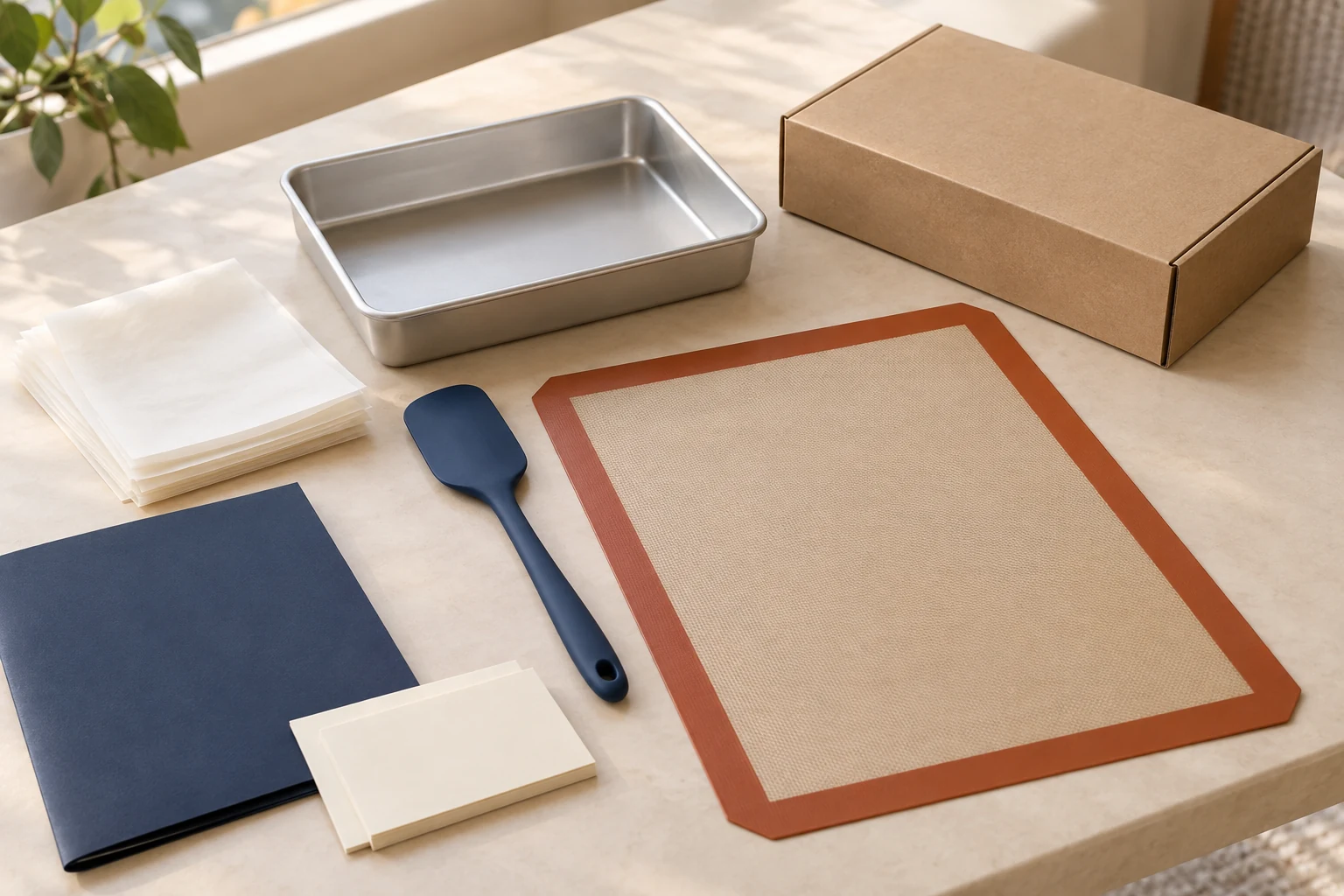
01 / Who we are
Our work begins with a practical question: what must this item do for your business? A tray has to fit the oven and the bake. A liner has to fit the tray and the working conditions. A retail set has to contain the right products, information and protection.
We bring those decisions into one project. BakewareLink connects the buying brief with specialized production capabilities, then coordinates the selected specification, samples, branding and supply requirements.
Business focus
Wholesale baking supplies, product sourcing, custom development coordination and private-label programs.
Metal forming, silicone production, paper converting and packaging involve different materials and processes. We organize the product route around the chosen item, with its own specification and approval steps. That makes the sourcing discussion concrete: a defined product, a defined pack and a clear decision to move forward.
Our role also covers the connections between items. When a buyer needs pans with fitted liners, or several tools in a branded kit, dimensions and quantities must agree across the range. A change to one component is reviewed against the products and packaging it affects.
02 / Product scope
Our baking-supply scope covers the items used to prepare, bake, handle, present and sell a product. Each category has its own selection details. We use those details to narrow the shortlist and build the specification for the item you intend to order.
A catalog reference provides a starting point. The approved material, measurements, use and packed configuration establish the supplied product.
Baking pans, trays and formed bakeware for a defined product and equipment fit.
Material, construction, outside footprint, usable base, rim and finish.
Mats, molds and preparation formats selected around the working surface and finished bake.
Mat outline, mold cavities, thickness, support, color, intended use and care.
Scrapers, spatulas, brushes and other tools for preparation and everyday bakery work.
Working profile, dimensions, handling, material and exact set contents.
Sheets, rolls and shaped liners for baking, wrapping or serving applications.
Paper construction, finished format, coating, print, dispensing and pack count.
Protection and presentation for the product, the retail range and the shipping carton.
Internal fit, inserts, artwork, instructions, assembled contents and carton configuration.
Across the range
Develop a modified product, a private-label range or a coordinated order across several categories.
How the pieces connect
The usable pan base establishes the liner outline. The packed pan and the selected set contents establish the box and insert dimensions. The complete configuration establishes the selling-unit count and carton plan.
We keep those relationships in the brief so a revised pan or pack does not leave the paired item working from an old dimension.
03 / Who we serve
A working bakery buys for equipment fit, handling and repeated production. A brand buys a complete selling unit. A distributor needs an identifiable assortment that can be received, sold and replenished. We organize the project around the buyer’s actual task.
Start with the baked product, tray or mold, preparation method and cleaning routine. Check samples in that workflow and define the bulk pack that operators will use.
Bakery supply programs →Develop the product with its color, marking, instructions, set contents and retail protection. Approve the assembled selling unit before releasing the pack artwork.
Branded range programs →Define the assortment, quantities per variant, destination requirements, receiving labels and replenishment references. Keep item counts and carton contents clear across the shipment.
Distributor supply programs →
One project, two configurations
A bakery may use tools in its own production and sell selected products to customers. We identify the professional bulk item and the retail pack separately, even when they share a product format.
Each configuration keeps its own quantity, contents, labels and protection. That gives the quote, sample review and receiving process a precise unit to work with.
Explore wholesale supply →04 / How we work
We move the project from a product reference to an approved supply configuration. The sequence is practical: define the requirement, compare the same scope, review representative samples and keep the delivered unit identifiable.
Minimums, development costs and timing are confirmed for the selected product and pack. A new design, a color change and a packaging-only update have different dependencies.
We establish the application, product reference, quantity, destination and selling channel. Dimensions and operating conditions sit alongside the commercial requirement.
A brief with essential requirements and open decisions.
We review an existing item, a modification or a new design. Material, construction, dimensions, branding and pack contents establish a comparable quotation.
A selected configuration and an agreed quotation scope.
We identify what each sample represents, agree practical checks and coordinate artwork and pack approval. The finished selling unit is reviewed with its actual contents.
A recorded product, artwork and packaging approval.
We align the agreed inspection, quantities, protection, carton identification and shipment scope. Mixed categories keep their own readiness dates and release requirements.
An item-level release and receiving plan.
We retain the approved revisions and delivered-lot references. Fit, handling or packing feedback is tied to the relevant item before changes are adopted.
A usable reorder specification and change record.
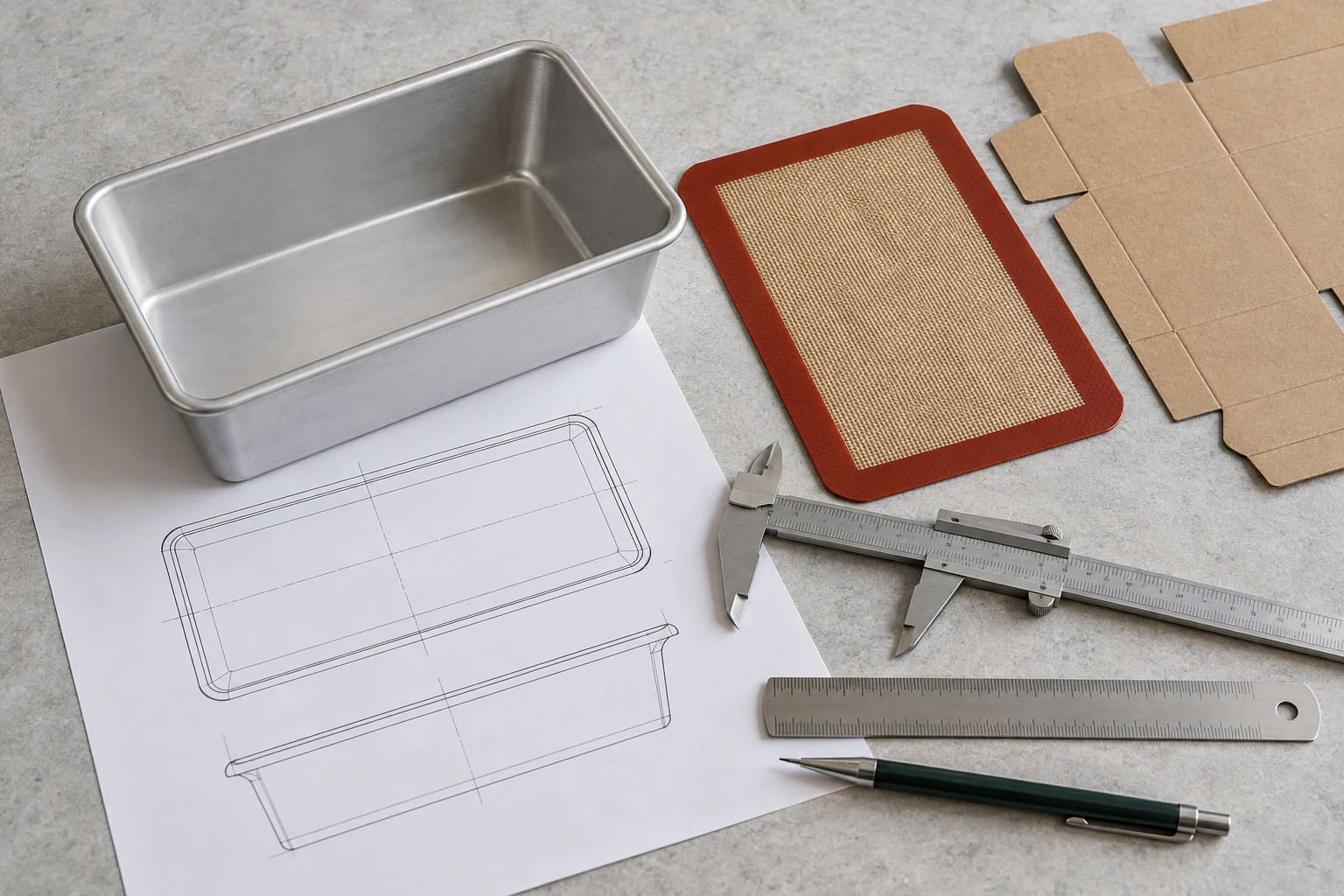
Before the quotation
We identify what the quoted unit contains, which customization is included and which setup or sample costs sit outside the unit price. A tray, a boxed tray and a complete baking kit need different cost and quantity bases.
For a multi-product program, readiness belongs to each line. We review shared pack components and approval dates before agreeing whether the order ships together or in stages.
Build a clear quotation brief →05 / Quality & continuity
Quality starts with an agreed product and acceptance criteria. A dimension without a measurement method, a color without a physical reference or a set without a contents list leaves room for different interpretations.
We connect the specification, representative sample and packing record. The order then has a concrete reference for inspection, delivery and replenishment.
| Record | Details retained | Purpose |
|---|---|---|
| Product | Material, construction, dimensions, finish, use conditions and the agreed measurement method. | The exact configuration selected for the order. |
| Sample & use trial | Sample identity, physical checks, actual application, trial conditions and accepted results. | A practical approval tied to the selected product. |
| Artwork & selling pack | File revision, physical color or print reference, instructions, codes, set contents and protection. | The complete unit the buyer or end customer receives. |
| Inspection & shipment | Agreed checks, accepted counts, inner and carton quantities, SKU identification and supply documents. | A shipment that can be reconciled to the released order. |
Identify the food-contact, material or other records required for the destination and intended use. Match them to the relevant construction, coating, decoration and product revision.
We keep the required document review with the approval brief. A sample trial and a product document answer different questions; both need to represent the configuration being ordered.
Record fit, handling, pack damage, counts or other receiving issues against the SKU and delivered lot. Describe the affected item and include measurements or photographs where useful.
Review proposed changes before the next order. A revised material, print, size or pack is linked to the checks and approvals it affects.
For repeat supply, the useful instruction is the approved specification revision and quantity by SKU. Keeping those references together makes a reorder easier to evaluate and prevents an old artwork file or pack count from becoming the default.
I coordinate product shortlists, specification and sample discussions, packaging inputs and quotation requirements. Send the product you have in mind and explain where it will be used or sold. We can then identify the decisions needed for the next step.
A finished drawing is useful, but an early project can also start from a current sample, a product link or a clear application. Mark the dimensions, materials or packing choices that still need a proposal.
Work with BakewareLink
Start with a product reference, drawing, current sample or application. Add the order quantity, destination and pack requirements. We will use that brief to define the next product review, sample and quotation step.
Download a sourcing brief ↓Buyer questions
BakewareLink is a B2B baking supplies sourcing partner. We coordinate product selection, specifications, custom development, samples, private-label packaging and supply requirements for commercial bakeries, brands, distributors and importers.
BakewareLink works as a sourcing and supply coordination partner across bakeware, silicone products, baking tools, paper and packaging. We work with specialized production capabilities and define the production route for the selected product. Material, customization, samples and packing are reviewed for that project.
Our scope covers metal bakeware and trays, silicone baking mats and molds, baking and pastry tools, parchment and foodservice paper, and bakery packaging. A buying program can combine categories while retaining separate product specifications, quantities and approval records.
Yes. We review existing products, modified formats and new designs against the buying brief. Custom dimensions, color, marking, printed layouts and retail packs are developed around the selected product. Feasibility, minimums, setup costs and approval stages are confirmed for each configuration.
Yes. Define the bulk item and the complete retail selling unit separately, including quantities, contents, labels and protection. We coordinate the shared project while keeping each configuration identifiable for quotation, approval, packing and receiving.
We define checks against the selected product, intended use and destination requirements. The specification, representative physical sample, artwork and packing record form the approval basis. Inspection scope and required documents are agreed for the order, and changes are reviewed before release or repeat supply.
Darren, Business Manager, coordinates product shortlists, specifications, sample discussions, packaging inputs and quotation requirements. Contact BakewareLink at sales@bakewarelink.com or send a sourcing brief through the inquiry form.
Send a product link, drawing, current sample or application description. Add intended use, dimensions, quantity per variant, destination, sales channel, branding and packing needs, and the required arrival date. Identify decisions that still need a proposal so the first review addresses the useful next step.
Project discussion
Your inquiry reaches BakewareLink for product sourcing, custom development, private-label or mixed-category programs. Include the decisions that are already fixed and those that need a proposal.
Send your product references, intended use, quantities and destination. Include pack or brand requirements so the quotation covers the unit you intend to buy.